Combining Teaching with Conferences During the Semester
Many academic conferences, workshops, and research visits take place during the teaching semester. As a result, we often find ourselves doubting whether we can attend a conference while our course is running. It can feel like a difficult juggling act, particularly if you are teaching multiple courses or have limited flexibility in the academic calendar.
The good news is that attending a conference does not have to mean leaving a gap in your course. With some forward planning, you can keep your students engaged while making the most of the professional opportunities that conferences and research visits offer. The key is to think ahead and communicate clearly with everyone involved.
Here are some strategies that have worked well for me and for colleagues over the years:
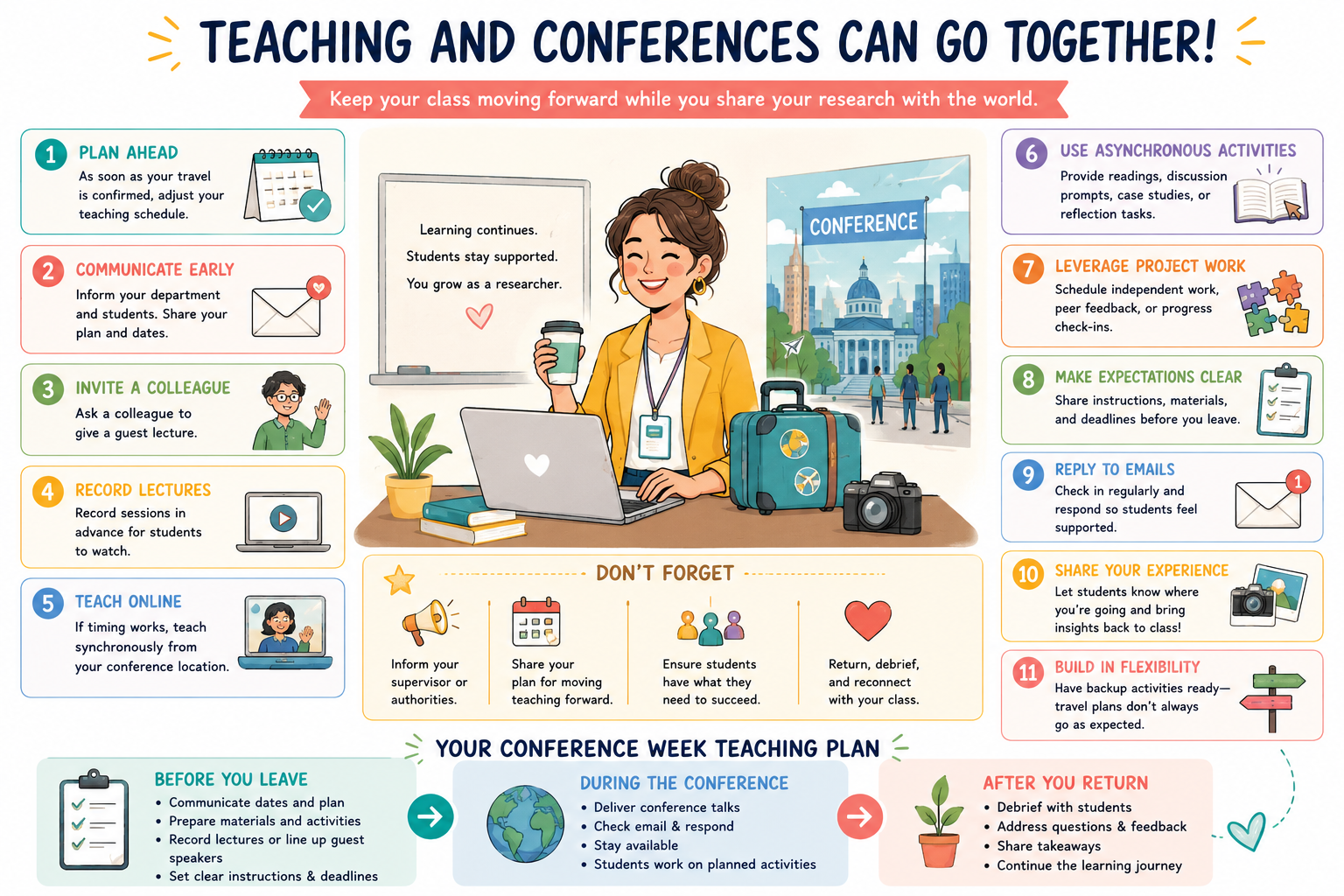
- Plan ahead as soon as your travel is confirmed. The earlier you know your conference dates, the easier it is to adjust your teaching schedule without last-minute stress.
- Inform your department and teaching coordinator. Make sure the relevant people know when you will be away and explain your plan for keeping the course on track. Demonstrating that you have thought everything through makes approval much easier.
- Invite a colleague to give a guest lecture. If a trusted colleague has expertise that fits your course, a guest lecture can enrich the students’ learning while covering one of your scheduled class sessions.
- Record lectures in advance. If your course relies heavily on lectures, consider recording one or more sessions before you leave so students can watch them during your absence.
- Teach online if the timing allows. Sometimes the time difference is manageable, allowing you to teach synchronously from your conference location. This option is not always ideal, but it can work well – I actually like teaching remotely to Ecuador when I am in Europe, as I can teach in the evening.
- Plan meaningful asynchronous activities. Reading assignments, discussion boards, case studies, literature reviews, reflection exercises, or small design tasks can keep students actively learning without requiring a live lecture.
- Use project work to your advantage. If students are working on larger assignments, schedule progress meetings, peer feedback sessions, or independent work during the week you are away.
- Make expectations crystal clear. Before leaving, explain exactly what students are expected to complete, where they can find the materials, and when assignments are due. Clear instructions prevent many unnecessary questions.
- Stay responsive to email. While you do not need to answer emails immediately from the conference floor, checking your inbox once or twice each day helps students feel supported and allows you to address urgent issues before they become larger problems.
- Share your enthusiasm with your students. Tell them where you are going and why. Students often appreciate seeing that their instructor is actively involved in research, and you can even bring examples or photos back to the classroom afterwards.
- Build in a little flexibility. Travel delays happen. Internet connections fail. Flights get cancelled. Having a backup activity or an extra day of asynchronous work prepared can save a great deal of stress if your travel plans change unexpectedly.
Perhaps the most important point is that conference travel should never come as a surprise to your students or your department (or your wallet, but that’s a different post I guess!). Your goal is not simply to be absent for a few days, but to ensure that learning continues uninterrupted. A well-prepared plan demonstrates professionalism and respect for your students while allowing you to benefit from the networking, collaborations, and new ideas that conferences provide.
It is also worth remembering that attending conferences ultimately benefits your teaching. The latest research findings, new case studies, fresh examples, and conversations with colleagues all enrich the material you bring back into the classroom. Rather than viewing teaching and conference travel as competing priorities, it is helpful to see them as activities that strengthen one another when planned well.
How do you manage your teaching responsibilities when conference season arrives? Have you discovered a strategy that works particularly well for you or for your students?