
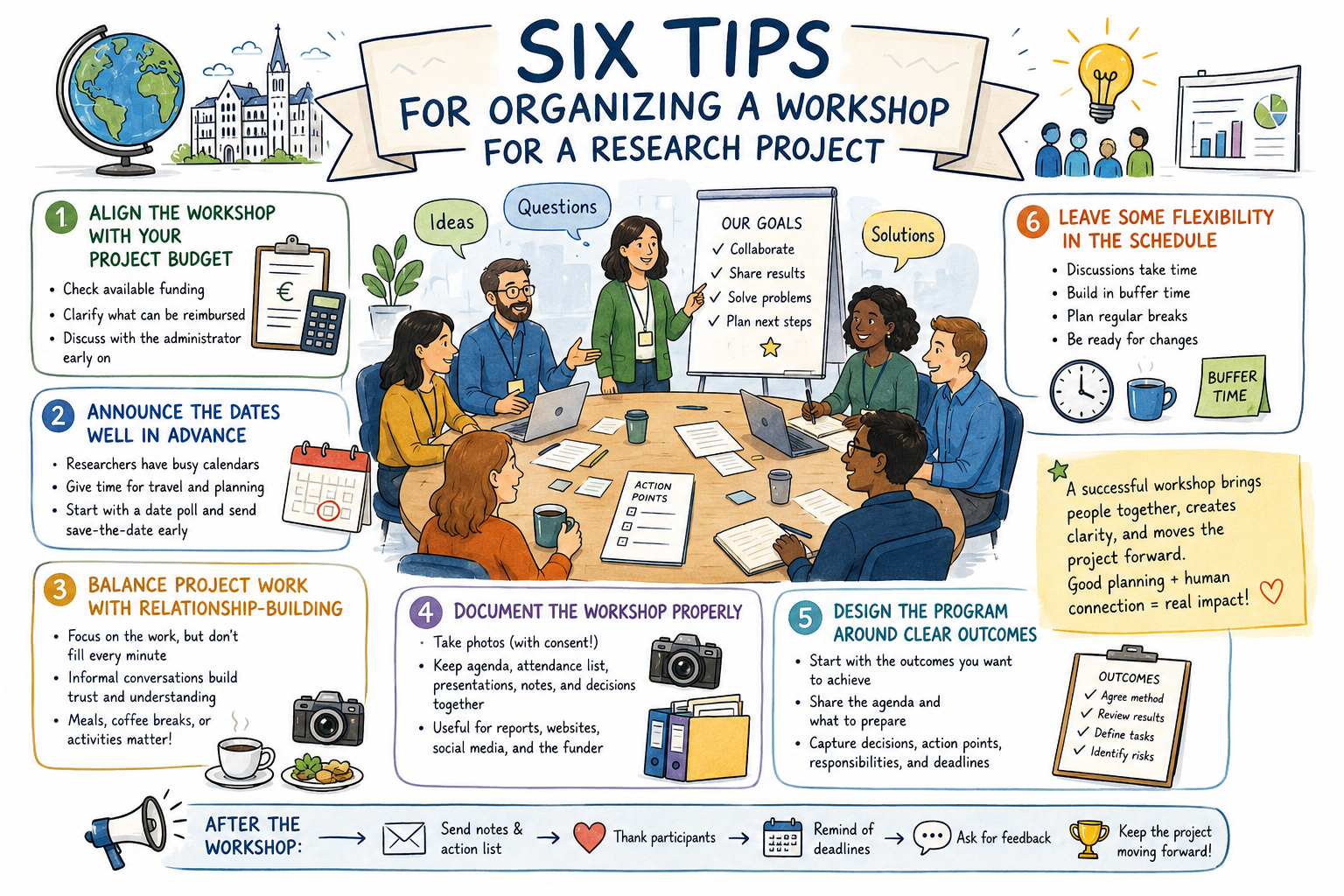
Six tips for organizing a workshop for a research project
Many research projects involve partners from different universities, countries, disciplines, or sectors. When you work in a consortium, organizing a workshop is often part of the project activities. These workshops can be especially important when you are the consortium lead, because they give you an opportunity to bring everyone together, review progress, discuss challenges, and make decisions about the next steps. At the same time, organizing a workshop requires more than simply selecting a date and booking a meeting room. You need to think about the project goals, the budget, the participants, the practical arrangements, and the outcomes you want to achieve.
Based on my experience with research projects, here are six points to consider when organizing a workshop.
- Align the workshop with your project budget: Before making any arrangements, check the project budget carefully. Determine how much funding is available for travel, accommodation, catering, room rental, equipment, and social activities. It is also important to clarify which costs can be reimbursed and which costs cannot. Discuss these details with the project administrator or financial officer early on. A workshop can become expensive quickly, especially when international travel is involved, so you want to avoid making plans that later turn out to be outside the budget.
- Announce the dates well in advance: Researchers tend to have very full calendars. Teaching, conferences, fieldwork, deadlines, and other project meetings can make it difficult to find a date that works for everyone. International participants may also need time to arrange travel, accommodation, visas, or family responsibilities. Therefore, announce the workshop as early as possible – or, better yet: identify at the stage of the proposal in which month this will take place. You can also start with a date poll and then send a save-the-date message as soon as the dates are confirmed. Do not wait until the full program is ready before asking participants to block the time in their calendars.
- Balance project work with relationship-building: The main purpose of the workshop will usually be to move the project forward. You may need to discuss work packages, review deliverables, solve technical problems, or make decisions about future activities. However, do not fill every minute of the program with presentations and formal discussions. Consortium partners also need opportunities to get to know each other better. Informal conversations over lunch, coffee, dinner and beers can improve communication and make future collaboration easier. A short social activity, site visit, or shared meal can be just as valuable as another hour of slides.
- Document the workshop properly: Take enough photographs during the workshop, provided that participants have agreed to be photographed. Capture both formal moments, such as presentations and group discussions, and informal moments, such as coffee breaks or a group dinner. You can use these images for project reports, newsletters, social media, the project website, and communication with the funding agency. In addition, keep the agenda, attendance list, presentation files, meeting notes, and key decisions together in the project archive. Good documentation will save you time later.
- Design the program around clear outcomes: Before deciding on individual sessions, ask what the workshop should achieve. Do you need to agree on a methodology? Review preliminary results? Prepare a deliverable? Divide responsibilities? Identify risks? Each session should contribute to one of these outcomes. Share the agenda in advance and explain what participants need to prepare. During the workshop, assign someone to take notes and keep track of decisions, action points, responsibilities, and deadlines. Without clear outcomes, a workshop can generate many interesting conversations without actually moving the project forward.
- Leave some flexibility in the schedule: Workshop discussions often take longer than expected, especially when partners are working through a difficult decision. Build some buffer time into the program rather than scheduling every session back-to-back. Regular breaks are also essential, particularly when the workshop lasts a full day or more. A flexible schedule allows participants to continue productive discussions without creating unnecessary stress. It also gives you space to respond to unexpected technical issues, travel delays, or last-minute changes.
A well-organized workshop can give new energy to a research project. It can help partners understand each other’s work, identify problems early, and create a shared sense of direction. The most useful workshops are not necessarily the most elaborate ones. They are the ones with clear goals, realistic planning, good communication, and enough space for people to connect.
After the workshop, send the notes and action list promptly. Thank the participants, remind them of the agreed deadlines, and ask for brief feedback. This follow-up turns the workshop from a one-time event into a practical step in the progress of the project.
What is your best tip for organizing a productive workshop with research partners?