Why I still take oral exams
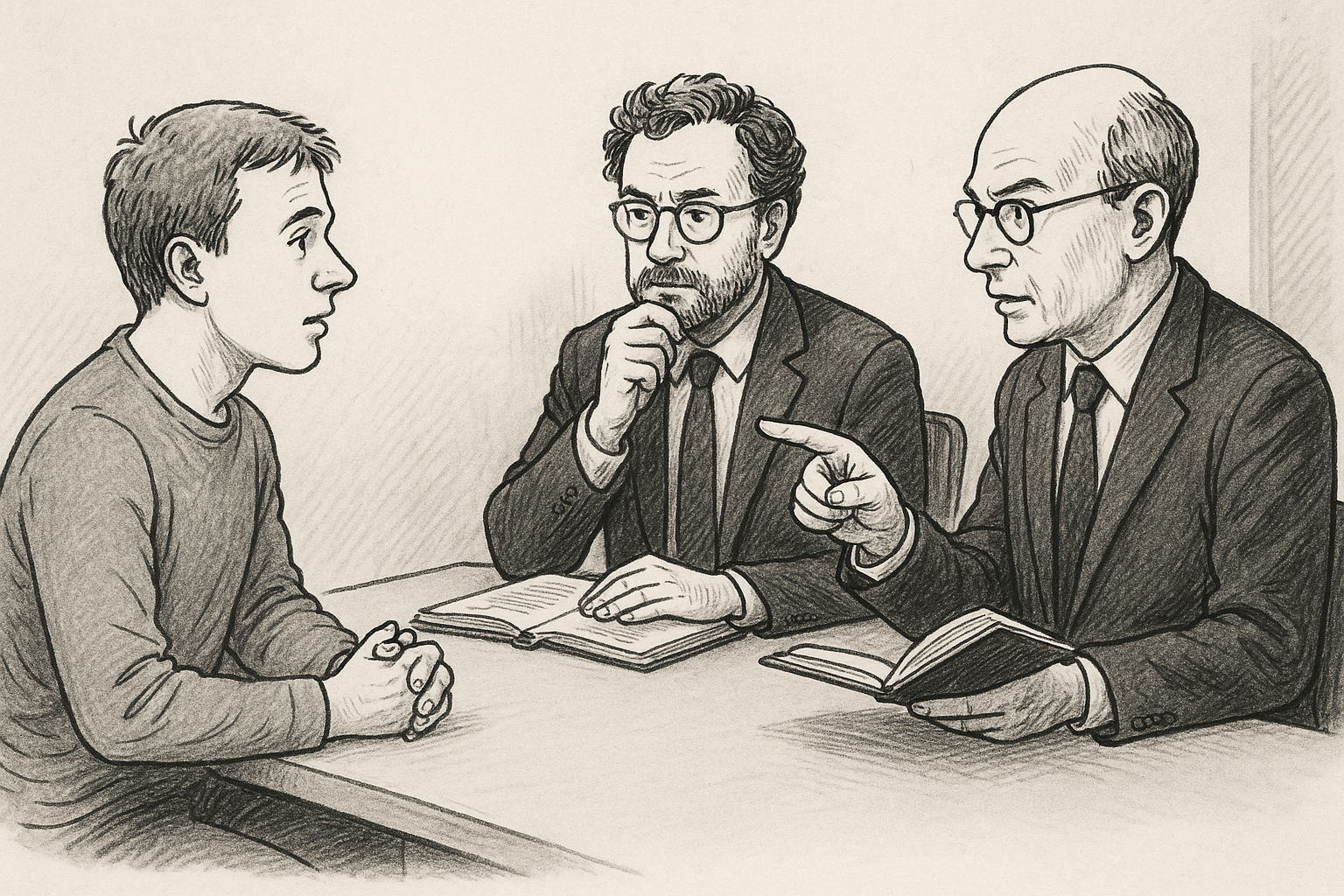
In the MSc program at Delft University of Technology, I teach and coordinate a course Assessment of Existing Concrete Structures. For this course, I still choose to assess students through oral exams (yup, every single one of them). This semester, that means 25 individual 45-minute sessions. It’s undeniably a massive time investment (my mornings in November are booked full with those exams) but I still think it’s the best option.
Why? Because despite the logistical effort (we take oral exams with two professors to make sure we are fair), oral exams provide a unique way of assessing student understanding. Here are the reasons why I still take oral exams:
- It’s the best way to truly see what a student knows. Written exams can show whether someone memorized equations or definitions. But only a conversation reveals whether they actually understand what they are talking about, and whether they can think on the fly to solve problems.
- There’s room for real discussion. Oral exams let us explore ideas beyond what a written exam allows. A student might start with a shaky answer, but through a few guiding questions, they often arrive at the right reasoning, or they start off super confident but then it turns out a lot is memorization.
- I can ask follow-up questions. One of the biggest strengths of oral exams is the flexibility to probe deeper. If an answer seems rehearsed, I can steer the discussion to test true comprehension. If something is unclear, I can immediately ask for clarification.
- It’s easier to spot who has memorized versus who has studied. Some students come in with perfect textbook answers . Others may not recall every detail but can apply concepts creatively and logically. An oral exam makes that distinction much more obvious.
- Immediate results. At the end of exam, I know exactly how the student performed. There’s no pile of grading waiting for me. My colleague and I discuss for 5 minutes, and then call the student back in. The feedback is direct, and the student also gets a clearer sense of where they stand. And, we then also ask the students for their feedback on the course.
Of course, oral exams are not without their challenges. They are time-consuming, and they require a lot of energy and focus (I am so worn out after a morning of taking exams). But I’ve found that the quality of evaluation they allow is worth the effort, especially at the graduate level.
In engineering practice, being able to explain your decisions, justify your assumptions, and adapt your explanations to the listener is a crucial skill. Oral exams are one way we can help students build those skills before they enter the workplace.
So yes, it takes weeks to get through all my students, but I feel that I’ve not just assessed my students; I’ve also had meaningful academic conversations with them. And that’s something I wouldn’t trade for a stack of multiple-choice sheets.
Do you still take oral exams?