
Organizing fieldwork
Fieldwork is one of the most exciting parts of research, but it is also one of the parts that requires the most preparation. A fair amount of my research is fieldwork-based, and even more so now that my work increasingly focuses on bridge load testing and bridge monitoring. Unlike desk-based research, fieldwork cannot simply be postponed to “tomorrow” if something is missing. When you are testing a bridge, working with traffic closures, coordinating with contractors, or depending on limited access windows, every minute matters.
Fieldwork, of course, has to be done in the field. That means dealing with real-world conditions that are often less predictable than laboratory settings: weather, access restrictions, equipment issues, and the practical limitations of working on active infrastructure. Because of this, careful preparation is essential. Good fieldwork is not just about collecting data; it is about collecting the right data efficiently and safely.
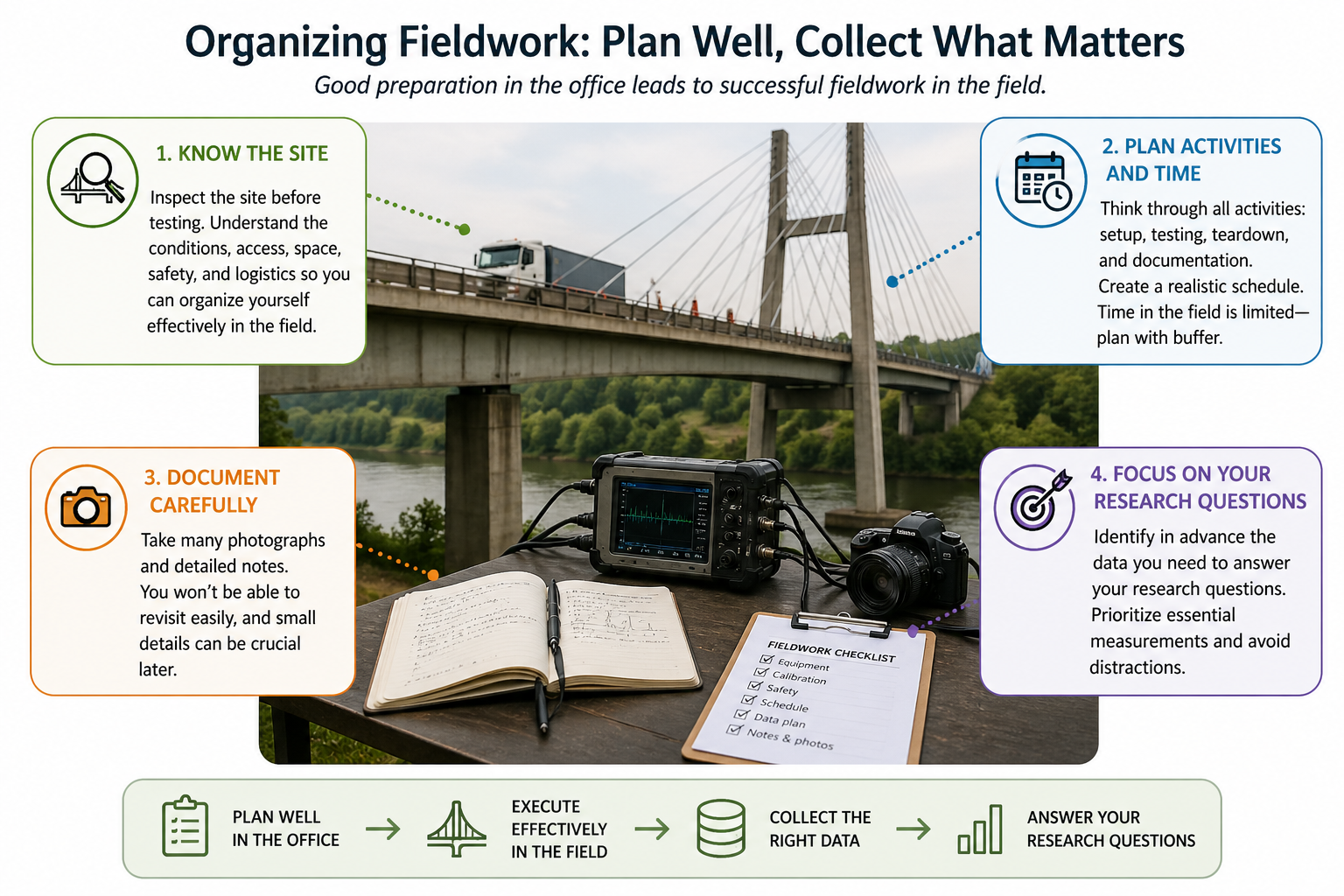
Over the years, I have learned that organizing fieldwork well can make the difference between a successful testing campaign and frustratingly long days outside. Here are a few recommendations that have helped me prepare for field investigations and bridge testing campaigns:
- Inspect and know the site before the actual fieldwork.
If possible, visit the site in advance. Walk around, observe the conditions, and understand the practical realities of working there. Where will equipment be placed? How will you access the bridge safely? Is there enough space for instrumentation, vehicles, or testing personnel? Knowing the site beforehand helps you avoid surprises and allows you to organize yourself much more effectively once the actual testing begins. - Plan the activities carefully and estimate the required time.
In fieldwork, and especially in bridge testing, time is often limited. You may only have access during specific hours, nighttime closures, or short maintenance windows. Think through every activity in advance: setup, calibration, testing, dismantling, and documentation. Create a realistic schedule and include some buffer time for unexpected delays. Fieldwork almost always takes longer than expected, so planning conservatively is usually the better choice. - Take many photographs and detailed notes.
You will not easily be able to return to the site to check a forgotten detail. During fieldwork, take far more photographs than you think you need and write down observations immediately. Small details that seem obvious in the moment can become very important later when analyzing data. Your notes and photographs will often become just as valuable as the measurements themselves. And don’t just take close-up pictures of cracks; also take pictures of the entire bridge for example. - Focus on the activities that directly answer your research questions.
There is always more that could be measured, tested, or observed in the field. However, time, budget, and access are limited. Before going to the site, clearly identify which data are essential for answering your research question. Prioritize these tasks first. It is easy to get distracted by interesting additional measurements, but your main responsibility is to collect the information that supports your research objectives.
Fieldwork can be demanding, but it is also one of the most rewarding parts of research. It brings you closer to the real-world application of your work and often provides insights that you would never gain behind a computer screen. With good preparation, a clear focus, and careful documentation, fieldwork becomes much more manageable—and much more valuable. In the end, successful fieldwork is not about doing everything, but about doing the right things well.
What is your best advice for organizing fieldwork?