
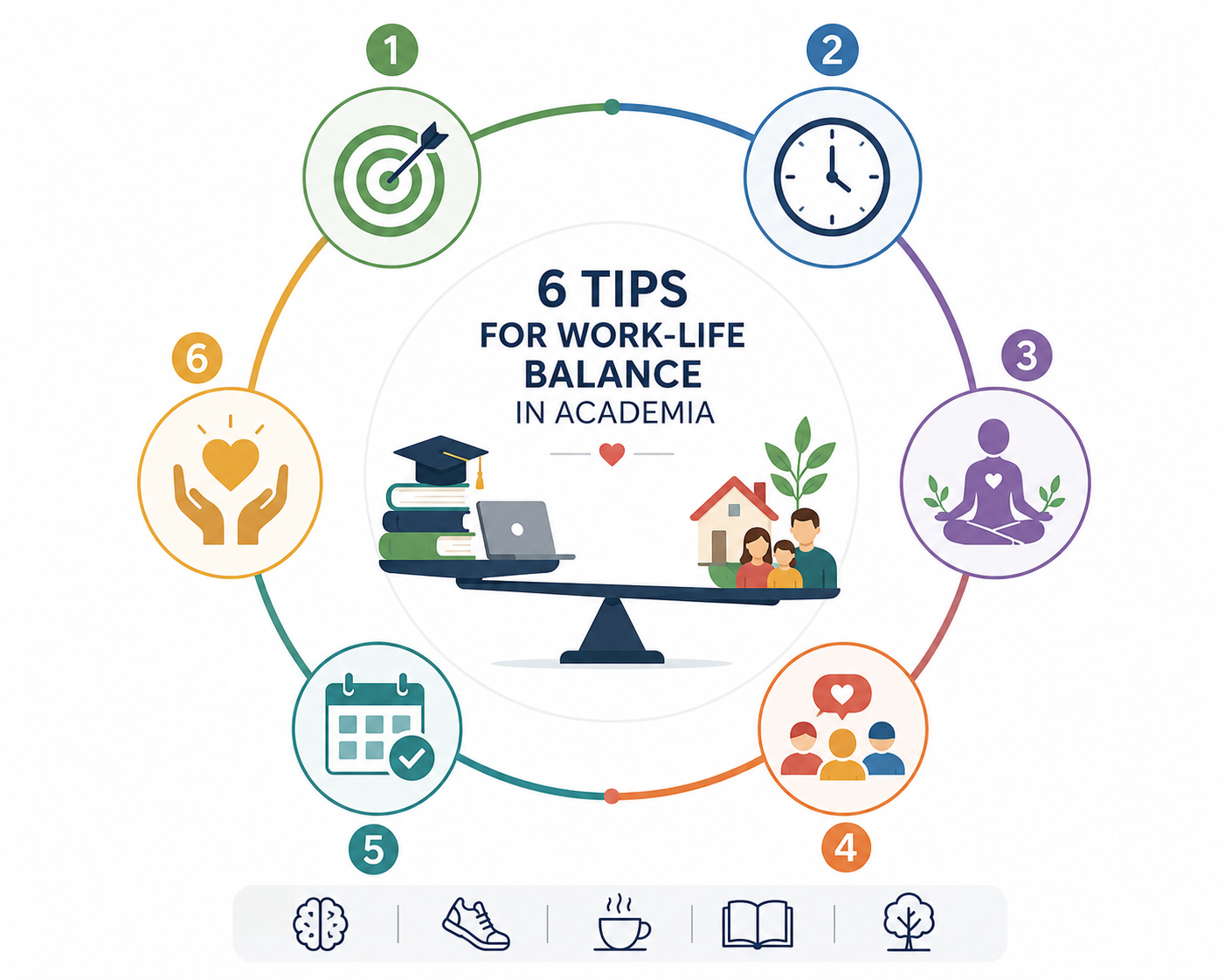
My top 6 Work-Life Balance tips for academics
Work-life balance in academia is a topic I have been thinking about for many years. Since joining academia, I have combined multiple roles: researcher, lecturer, supervisor, wife, mother, and collaborator across institutions and countries. Like many academics, I have often wondered how it is possible to do meaningful research while also being present for family, health, and personal interests. And, as a good researcher, I turned these questions into research on the topic. I recently presented at the spring dinner of the Delft Young Academy, and am sharing today what we as individuals can do.
The challenge is that academia often promotes vague notions of “excellence.” When is our work good enough? When have we done enough? The image of the ideal academic is often someone who is available anytime, anywhere, and who has no caregiving responsibilities competing for their attention. Yet that image does not reflect the reality of many academics today.
Over the years, I have learned that work-life balance is not something you achieve once and for all. It is an ongoing practice, and very much a function of our environment. Here are six tips that have helped me.
- 1. Define what “enough” means for you: Academic work expands endlessly if we let it. There is always another paper to read, proposal to write, or task to complete. If you do not define your own standards and priorities, you may end up chasing an impossible ideal. Take time to identify what matters most in your current season of life. Your definition of success does not need to match someone else’s.
- 2. Create clear boundaries: Flexibility is one of academia’s greatest advantages, but it can also be one of its greatest traps. Without boundaries, work can easily spill into evenings, weekends, and holidays. Set limits around your working hours, email habits, and availability. Boundaries help protect your energy and make it possible to be fully present both at work and at home.
- 3. Treat leisure as essential, not optional: Many academics view leisure as something to earn after finishing their work. The problem is that the work is never finished. Whether it is exercise, music, hobbies, time with friends, or simply resting, leisure activities help replenish the mental and emotional resources required for research and teaching. And because as a human being you need it (I do hate the argument that you need to rest to work better, as if the whole purpose of our life is to work…).
- 4. Build and nurture your support network: Academia can feel isolating, particularly for caregivers and early-career researchers. Having people you can rely on makes a tremendous difference. Invest in relationships with colleagues, mentors, friends, and family members. Ask for help when you need it, and offer support when others need it. Work-life balance is rarely achieved alone. For this reason, I speak a lot about collegiality (as my way of halting the corrosion of character).
- 5. Use flexibility strategically: One of the benefits of academic work is the ability to structure many tasks independently. Instead of viewing flexibility as an invitation to work all the time, use it intentionally. Adapt your schedule to your energy levels, family responsibilities, and personal commitments. A flexible schedule should support your life, not consume it.
- 6. Contribute to a culture of care: Work-life balance is often discussed as a personal responsibility, but workplace culture matters enormously. The attitudes of leaders, colleagues, and institutions shape what is possible. Work-life balance is not just a personal choice, it is a social construct. Support colleagues who are navigating caregiving responsibilities, illness, or personal challenges. Normalize conversations about wellbeing. Small acts of compassion can help create a healthier academic environment for everyone.
Work-life balance is not simply an individual challenge; it is influenced by academic culture, institutional expectations, and societal norms. While we cannot change every aspect of the system overnight, we can make choices that support our wellbeing and contribute to more humane workplaces.
The goal is not perfection. The goal is to build a sustainable academic career that allows you to thrive both inside and outside the university.
How do you find balance in your tasks and responsibilities?