
Supervising BEP projects
Since Q4 of 2025, I’ve been supervising more and more Bachelor Final Project students from TU Delft. At TU Delft, this project is often referred to as the BEP (Bachelor Eindproject), and it has a very particular characteristic: it only lasts for one quarter. In practice, that means students who take the BEP in Q4 start around the end of April and need to wrap everything up by the end of June. Compared to longer Master’s theses, this timeline is incredibly short.
That short timeframe changes everything about how I approach supervision. There is little room for exploration without direction, and both the student and the supervisor need to be intentional from day one. Over the past year, I’ve learned a few lessons about what makes these projects run smoothly—and what can easily derail them.
Here are some of the main lessons I’ve learned:
- The work plan needs to be ready immediately.
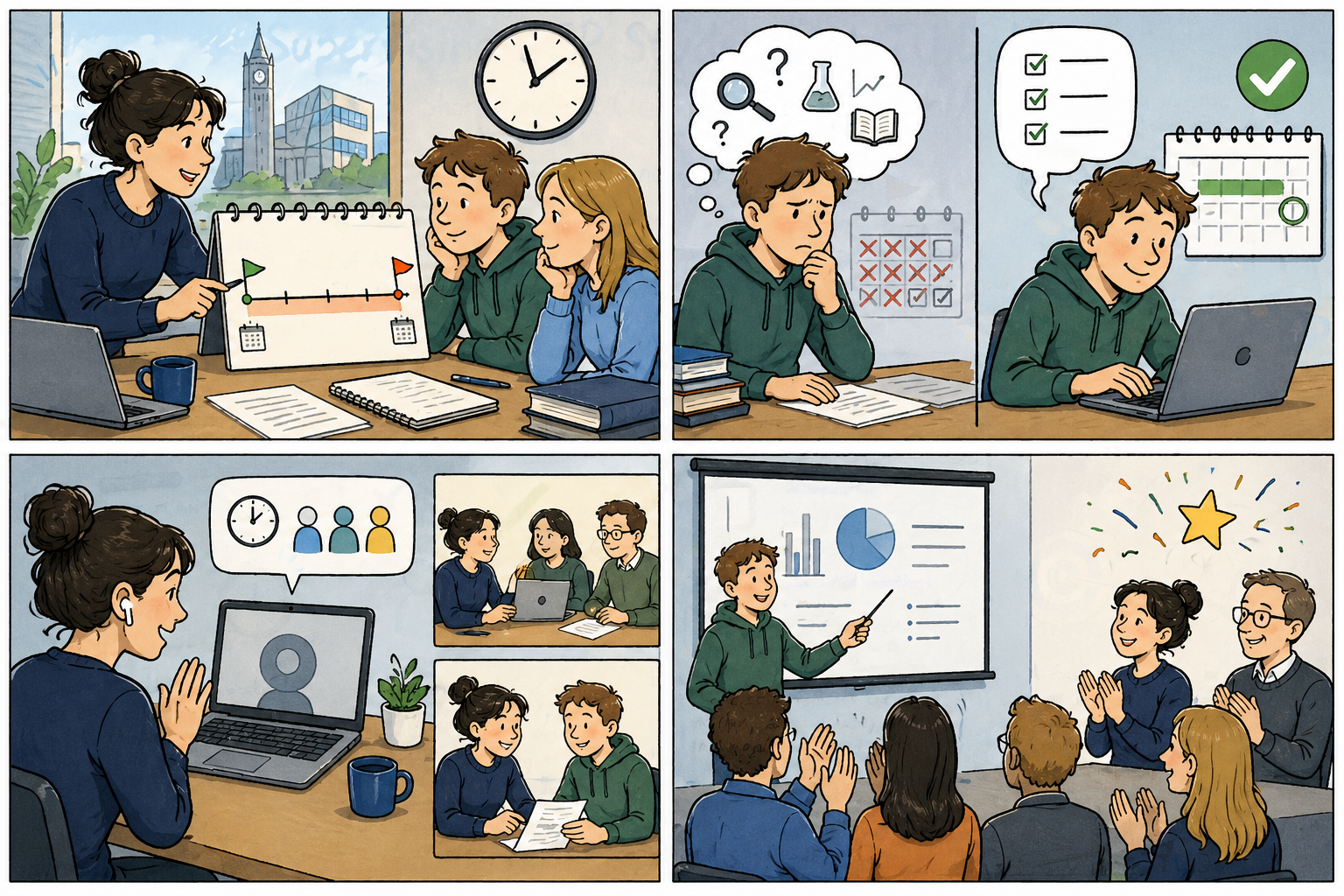
Because the project is only one quarter long, students simply cannot spend two or three weeks “figuring out” what they want to do. Ideally, the work plan should be drafted during the very first week or even before the official start of the project. The faster students can move from orientation to execution, the better. A delayed start often means a rushed ending. - Limiting the number of students is necessary.
This quarter was the first time I had to set a firm limit on how many students I could supervise. I received far more requests than I could realistically handle, and I decided to cap the number at four students. Even that already feels like a full load. Saying no is never easy, especially when students are motivated and interested, but good supervision requires time, attention, and availability. Overcommitting helps nobody. - Structure helps everyone.
To manage the practical side of supervision, I now block one fixed hour per week in my calendar for what I call my inloopuurtje: a visiting hour with my Zoom room open for any quick questions. This reduces endless back-and-forth emails and gives students a predictable moment to ask for feedback. On top of that, there are the scheduled milestones: the midterm meeting, the final presentation, and meetings with the second supervisor. It does add a lot of meetings to my calendar. - The topic must be narrow and realistic.
Perhaps the most important lesson is that the assigned topic must be limited in scope. In a short bachelor project, there is no time for a broad, ambitious research question. The project needs to be focused enough that the student can actually complete it well within the available weeks. A smaller, well-executed project is far better than an overly ambitious plan that never reaches the finish line.
Supervising bachelor theses in this format has reminded me that good research supervision is often about boundaries: clear expectations, realistic planning, and manageable scope. The BEP is short, but that does not make it simple. If anything, the compressed timeline makes structure even more important.
For me, this experience has also been a lesson in balancing enthusiasm with capacity. I enjoy working with students and helping them take their final steps as bachelor students, but I’ve also learned that effective supervision means protecting time: for them and for myself. And that means: having to disappoint motivated students and limiting myself to a cohort of four graduating students.
What is your best advice for supervising BSc thesis projects?